Issues that should be paid attention to in injection molding of transparent thick-walled plastic parts
Transparent, thick-walled plastic parts face numerous challenges during the injection molding process. Not only must they exhibit excellent light transmittance, but they must also be free of internal defects such as bubbles, shrinkage cavities, and silver streaks, while also avoiding surface scratches or deformation to meet stringent requirements for optical performance and appearance quality. These parts are widely used in medical devices, optical instruments, high-end packaging, and other fields, such as transparent protective covers, optical lenses, and containers. Their molding quality directly impacts the product’s performance and market competitiveness. Therefore, the injection molding process requires careful consideration of multiple aspects, including material selection, mold design, and process parameter settings, to address potential issues and ensure part quality.

Material selection is fundamental to the injection molding of transparent, thick-walled plastic parts, directly impacting their transparency and molding performance. Ideal materials should exhibit high light transmittance, low haze, good flowability, and thermal stability, while also exhibiting minimal and stable shrinkage to minimize dimensional deviation and internal stress after molding. Commonly used transparent materials include polymethyl methacrylate (PMMA), polycarbonate (PC), polystyrene (PS), and polyethylene terephthalate (PET). Polycarbonate, with its excellent impact toughness and heat resistance, is suitable for producing demanding, thick-walled parts, such as optical lenses. PMMA boasts a high light transmittance exceeding 92%, but suffers from poor impact toughness, making it suitable for decorative, thick-walled parts. Polystyrene offers excellent flowability and ease of molding, but suffers from poor heat resistance, making it suitable for thick-walled parts in low-temperature environments. Material purity should also be considered when selecting materials to avoid impurities that could compromise transparency. Specialized transparent plastics are typically selected to minimize internal impurities and bubbles.
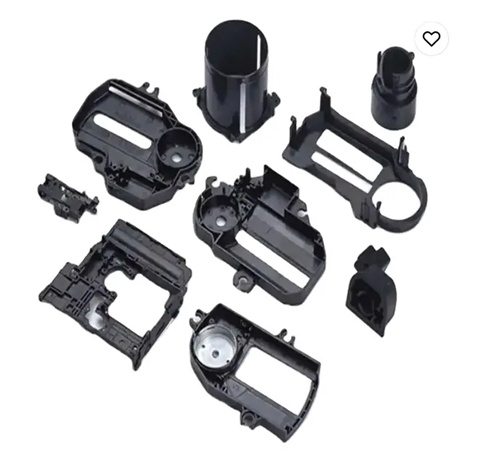
Mold design is crucial to the molding quality of transparent, thick-walled plastic parts, requiring special attention to aspects such as cavity structure, gate design, cooling system, and exhaust system. Cavity surface roughness must be kept to a low level (Ra ≤ 0.02 μm) to ensure the part’s surface finish and avoid light scattering and reduced transmittance caused by surface roughness. Therefore, the mold cavity requires precision polishing to achieve a mirror-like finish. Gate design should ensure that the melt evenly fills the cavity to avoid weld marks. For thick-walled parts, larger gates (such as fan gates or circular gates) should be used. These gates should be located in thick-walled areas or at the center of symmetry, allowing the melt to fill the cavity via the shortest path and minimize temperature loss during flow. The cooling system should be evenly distributed, especially in thick-walled areas where additional cooling water channels should be added. The cooling rate should be controlled to avoid uneven cooling that can cause stress or shrinkage cavities within the part. The distance between the cooling water channels and the cavity surface should be consistent, generally 15-20 mm, to ensure uniform cooling. The exhaust system must be sufficient. Exhaust grooves should be set at the location where the melt is last filled (such as the end of the cavity and the corner). The groove depth should be controlled at 0.02-0.05mm and the width should be 5-10mm to ensure that the air in the cavity can be discharged smoothly to avoid bubbles or air marks.
Setting process parameters is key to the injection molding of transparent thick-walled plastic parts. Parameters such as injection pressure, injection speed, temperature, and holding pressure must be precisely controlled to minimize defects. The injection pressure should be high enough to ensure the melt fills thick-walled areas. It is generally 20%-30% higher than for thin-walled parts. However, excessive pressure can increase stress within the part, potentially causing cracking or deformation. Therefore, adjustments must be made based on material fluidity and part structure. For example, the injection pressure for thick-walled polycarbonate parts is typically 80-120 MPa. The injection speed should be controlled in stages: initially at a slower speed to prevent air from being drawn into the melt; in the middle, at a faster speed to minimize melt cooling; and finally, at a slower speed to ensure adequate venting of the cavity. The speed range is generally 20-80 mm/s. The barrel temperature must be set according to the material’s characteristics. The barrel temperature for polycarbonate is typically 280-320°C, and for polymethyl methacrylate, 210-240°C. Excessively high temperatures can cause material decomposition, resulting in silver streaks or discoloration. Excessively low temperatures can lead to insufficient melt fluidity, making filling difficult. Mold temperature also requires precise control. The mold temperature for polycarbonate is typically 80-120°C, and for polymethyl methacrylate, 40-60°C. Higher mold temperatures can slow the melt’s cooling rate, reduce internal stress, and improve part transparency.
Controlling the holding and cooling stages significantly impacts the quality of transparent, thick-walled plastic parts, directly impacting their dimensional accuracy and internal quality. The holding pressure and time must be adjusted based on part shrinkage. The holding pressure is generally 50%-70% of the injection pressure, and the holding time should be long enough to compensate for melt shrinkage in thick-walled areas and avoid shrinkage cavities. For example, for a polycarbonate part with a 10mm wall thickness, the holding time can be set to 20-30 seconds. Cooling time is crucial for molding thick-walled parts. It is important to ensure that the part is sufficiently cooled and its internal structure is stable before demolding, to avoid deformation after demolding due to insufficient cooling. The cooling time is typically 1.5-2 times the part wall thickness (in seconds). For example, for a 10mm wall-thick part, the cooling time can be set to 15-20 seconds. During the cooling process, avoid excessive cooling rates, as this can lead to large temperature differences between the inside and outside of the part, generating internal stresses that can affect transparency and mechanical properties. Slow cooling can be achieved by controlling the mold temperature gradient.
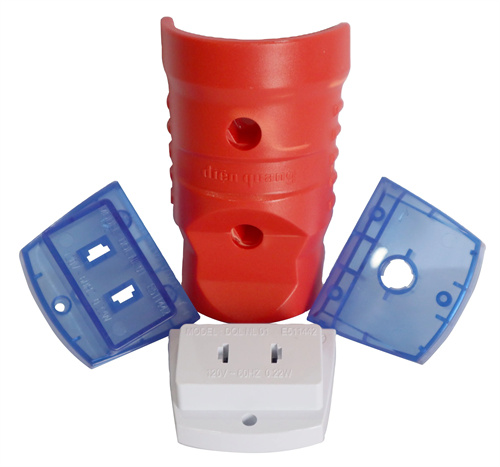
After injection molding, transparent thick-walled plastic parts also need to undergo appropriate post-processing to eliminate internal stress and further improve quality. For materials that are prone to internal stress, such as polycarbonate, annealing treatment can be used. The plastic parts are placed in an oven at 120-130°C for 2-4 hours and slowly cooled to room temperature. This can effectively eliminate internal stress and reduce the risk of cracking of the plastic parts. In addition, the molded plastic parts need to avoid drastic temperature changes and mechanical shock to prevent surface scratches or internal damage. During storage and transportation, soft packaging materials should be used to avoid friction between plastic parts and maintain surface finish. By strictly controlling each link of the molding process and combining it with appropriate post-processing, thick-walled plastic parts that meet high transparency and high precision requirements can be produced, providing reliable product support for applications in related fields.
