The basic structure of injection mold
The basic structure of an injection mold consists of six major systems: the molding component, the gating system, the guide mechanism, the ejection mechanism, the temperature control system, and the mold frame. These systems work together to complete the molding and demolding of the product. The molding component is the core part that directly contacts the plastic melt and includes the cavity (forming the exterior surface of the product) and the core (forming the interior surface). Depending on the product structure, it can be designed as a monolithic or modular structure. The modular structure facilitates machining and replacement. For example, the cavity of an automobile bumper mold is composed of multiple pieces, which reduces the difficulty of machining large parts. The material of the molding component must have high strength (≥300MPa) and wear resistance (hardness ≥50HRC). Alloy steels such as Cr12MoV and 718H are commonly used. Dimensional accuracy is guaranteed through heat treatment and precision machining.
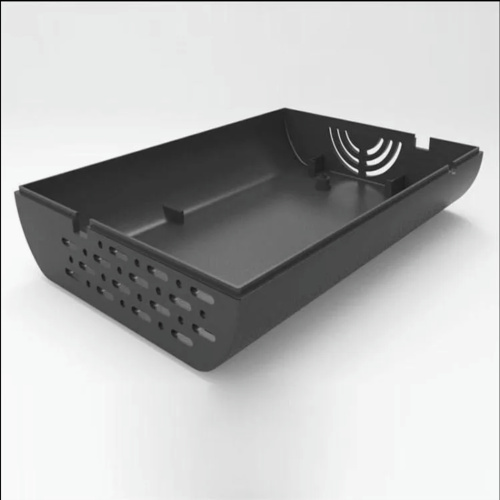
The gating system is responsible for introducing the plastic melt from the injection molding machine’s nozzle into the mold cavity. It consists of a main runner, branch runners, gate, and slug well. The main runner directly connects to the nozzle and has a conical shape (cone angle of 2°-4°) to facilitate demolding. The branch runner distributes the melt to the various cavities. Its cross-section is usually circular or trapezoidal, with a diameter of 6-10mm, ensuring smooth melt flow. The gate is a key component connecting the branch runner to the mold cavity. Its small size (0.5-2mm) controls the filling speed and facilitates the separation of slugs. Common gates include side gates, point gates, and latent gates. For example, point gates are often used for thin-walled products to ensure rapid melt filling. The slug well, located at the end of the main runner, stores the cold slug, preventing it from entering the mold cavity and affecting product quality.
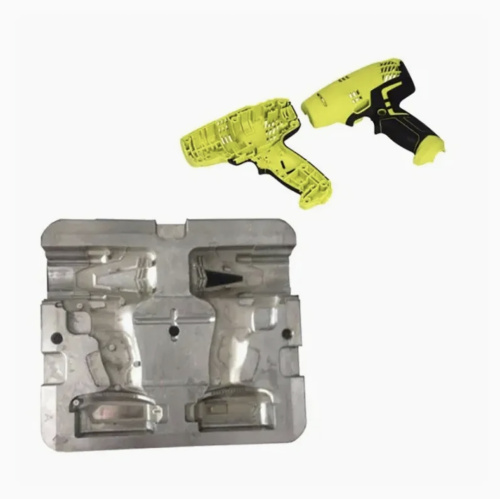
The guide mechanism ensures precise alignment of the movable and fixed molds during mold opening and closing. It consists of guide pins, guide bushings, and locating pins. Guide pins are evenly distributed around the mold (usually four), with a diameter of 16-30mm and a length 10-15mm longer than the cavity depth, ensuring effective guidance during initial mold closing. The guide bushings and guide pins feature an H7/f7 clearance fit, and the inner bore is surface-hardened (hardness 50-55 HRC) to reduce wear. Large molds also require precision positioning mechanisms (such as tapered locating pins and locating blocks), with a clearance of ≤0.01mm. The relative position error between the movable and fixed molds is controlled to ≤0.02mm to prevent collision between the core and the cavity. The reliability of the guide mechanism directly impacts mold life and requires regular lubrication and wear inspection. Replacement is required if the clearance exceeds 0.05mm.
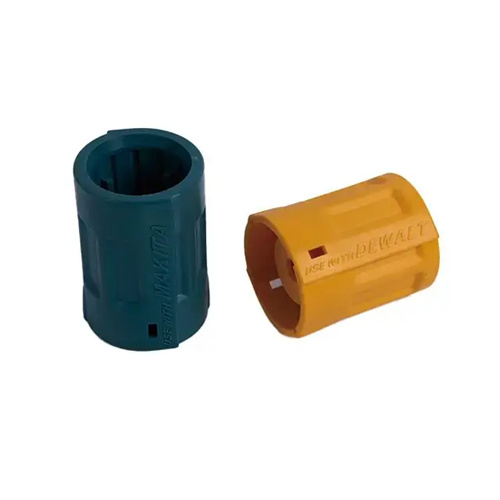
The ejection mechanism ejects the product from the core or cavity after the mold is opened. It is mainly composed of an ejector pin, an ejector tube, a push plate, a reset rod, etc. The ejector pin is the most commonly used ejection part, with a diameter of 3-10mm. It is distributed in the parts of the product with large clamping force (such as ribs and columns). The top of the ejector pin is flush with the surface of the core (error ≤ 0.01mm) to avoid ejection marks on the surface of the product. For cylindrical products, an ejector pin is used to ensure uniform force; large flat products are ejected with an ejector plate. The clearance between the ejector plate and the core is ≤ 0.03mm to prevent overflow. The reset rod pushes the ejection mechanism back to its initial position when the mold is closed. The length needs to be 0.02-0.05mm longer than the ejector pin to ensure that it is reset in place. The movement of the ejection mechanism needs to be smooth and free of jamming, and the friction resistance is reduced by guide sleeves and grease.
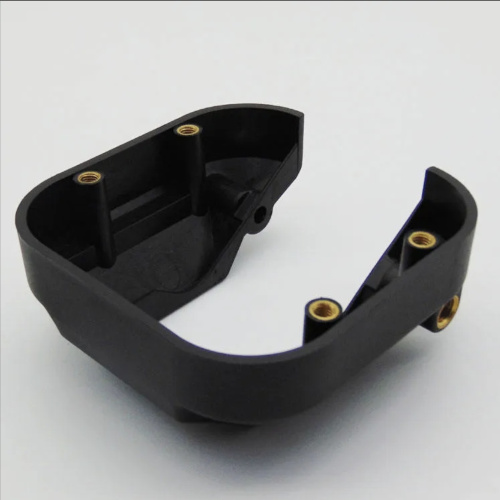
The temperature regulation system controls the mold’s operating temperature and consists of cooling channels, heaters, and a thermostat. Its design directly influences the cooling rate and molding cycle. Cooling channels are typically through-holes with a diameter of 8-12mm, distributed along the cavity contour and 15-25mm from the cavity surface to ensure uniform temperature (temperature difference ≤5°C). Deep cavities require water wells or sprinkler pipes to enhance cooling. For crystalline plastics (such as PA and POM), the mold temperature should be controlled between 80-120°C to accelerate crystallization. For amorphous plastics (such as PC and ABS), the mold temperature should be 50-80°C to reduce internal stress. The heating system, used in low-temperature environments or where elevated mold temperature is required, utilizes heating rods or coils with a power density of 20-50W/cm². Combined with a thermostat, it achieves control accuracy of ±1°C.